
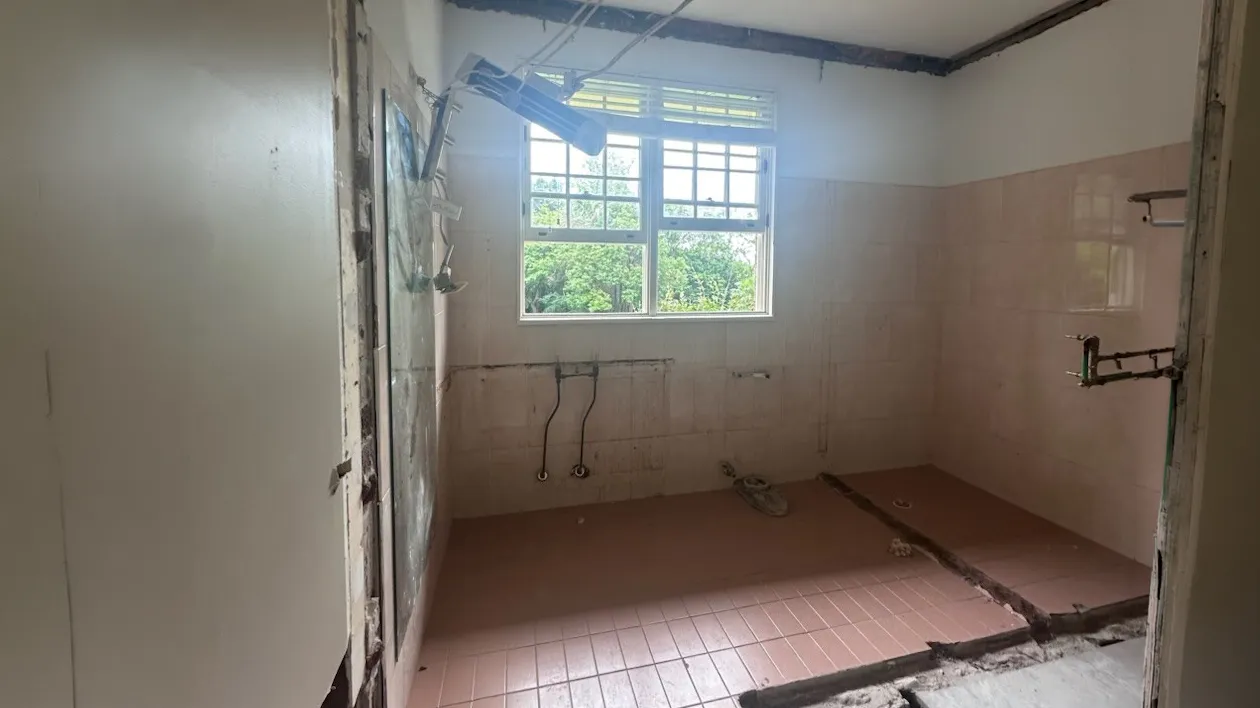
A standard bathroom renovation takes about 4 weeks on site (15 to 20 working days), up to 5 for larger jobs. From signing your contract to your first shower, allow around 8 to 9 weeks: roughly 4 weeks for ordering and approvals, then 4 to 5 weeks on site. A cosmetic refresh, where you swap fixtures but keep your existing tiles, takes 3 to 7 days. A renovation that changes the layout or involves structural work takes 4 to 6 weeks. A fully tiled renovation needs waterproofing and curing time that can’t be rushed.
This guide helps you work out how long your renovation will take, what happens on each day of the build, and how to stop your timeline blowing out.
How Long Does It Take to Renovate a Bathroom? (Timeline Calculator)
Most full bathroom renovations take 14 to 20 working days on site, about 4 calendar weeks. Use the calculator below to adjust that for your scope.
Every bathroom is different, so the fastest way to get a realistic estimate is to score your own project. Start with the base build of 14 working days, then add or subtract days based on your scope.
| Project Variable | Condition | Time Adjustment | Your Score |
|---|---|---|---|
| Base build | Strip to frame, waterproof, tile floor and shower walls, same layout | 14 working days | 14 |
| Plumbing layout | Moving the toilet, shower or vanity across a concrete slab | + 3 days | [ ] |
| Plumbing layout | Moving fixtures on a raised timber subfloor | + 1.5 days | [ ] |
| Tiling coverage | Floor-to-ceiling tiles on all four walls (instead of shower-only or half height) | + 3 days | [ ] |
| Tile type | Large format porcelain, intricate mosaics or natural stone that needs sealing | + 2 days | [ ] |
| Shower screen | Custom frameless glass (measured after tiling, then manufactured) | + 7 to 10 days (toilet and vanity usable while you wait) | [ ] |
| Structural work | Moving a non-load-bearing wall, adding a window, in-wall cistern or niches | + 2 to 4 days | [ ] |
| Cosmetic only | Keeping existing tiles and waterproofing (swapping vanity, tapware, toilet) | − 10 days | [ ] |
| Total | Your estimated on-site working days | [ ___ days ] |
What your score means
- 4 to 6 working days (cosmetic refresh): No waterproofing or retiling. You’ll only lose water to the room for 1 day.
- 14 to 20 working days (standard full renovation): The industry norm. About 4 calendar weeks once you factor in weekends, up to 5 for larger jobs. If you only have one bathroom, look into portable bathroom or shower trailer hire.
- 20 to 30+ working days (custom structural remodel): 4 to 6 calendar weeks. Plan for a temporary bathroom setup.
- Apartments: Add 2 to 6 weeks before Day 1 for strata approval, on top of the on-site build.
Turn your score into a real-world timeline
- Convert to calendar days. Multiply your working days by 1.4 to account for weekends and public holidays. For example, 15 working days equals about 21 calendar days without that bathroom.
- Add pre-start lead time. Allow around 4 weeks before Day 1 for ordering tiles, tapware and vanities. Demolition shouldn’t start until every fixture is physically on site.
Can a Bathroom Be Renovated or Fitted in One Day?
A full bathroom renovation can’t be done in one day. Chemistry sets the pace, not effort. Screed beds, waterproofing membranes and tile adhesives all need 24 to 72 hours to cure under manufacturer specifications and Australian waterproofing standards.
Comparing your two options
| 5-Day Cosmetic Fixture Swap | 4-Week Full Renovation | |
|---|---|---|
| Downtime | 4 to 6 days | 15 to 20 working days |
| What gets replaced | Vanity, toilet, tapware, mirror, paint, shower screen | Everything stripped to the frame; new waterproofing, screed and tiles |
| Waterproofing checked? | No (existing membrane left untouched) | Yes (new compliant membrane with certificate) |
| Property value impact | Moderate (clean, modernised look) | High (compliance plus a quality finish) |
| Typical cost | Up to about $10,000 | From $19,980 |
For a detailed breakdown, see our guide to bathroom renovation costs in Sydney.
Which option suits you?
Choose a 5-day cosmetic swap if your tiles and waterproofing are in good condition and you simply want to modernise a dated vanity, toilet and tapware, perhaps before selling or leasing.
Choose a 4-week full renovation if your bathroom is over 15 years old, smells musty, has cracked grout or loose tiles, or you want to change the layout and add real value to your home.
Quick decision path
- Is there water damage, mould or cracked tiling in the shower? Yes → You’ll need to strip back to the frame. Go with a full renovation. Liners installed over a leaking wall can trap moisture against your house frame. No → Go to question 2.
- Are you happy with your current floor and wall tiles? Yes → A cosmetic fixture swap will likely do the job. No → Go with a full renovation.
How Long Does a Standard Bathroom Renovation Take? (Day-by-Day Schedule)
A standard bathroom renovation takes 15 to 20 working days (about 4 calendar weeks, up to 5 for larger jobs) of on-site work. Two things set the pace: the order the trades work in, and how long each layer takes to cure. Waterproofing, screed and tile adhesive each need their full drying time. Rush them and things fail.
The 18-Day Bathroom Renovation Schedule
Print or save this schedule to track your builder’s progress day by day.
Day 1: Demolition and strip-out
Water and power to the room are disconnected, old fixtures removed, floor tiles broken up and wall linings stripped back to the timber frame or brick.
From today, there’s no running water in this room.
Day 2: Carpentry and framing
Any water-damaged timber studs are replaced and recessed shower niches are framed.
Day 3: Plumbing and electrical rough-in
The plumber runs hot, cold and waste pipes in the walls and floor for your new layout. The electrician runs cabling for heated towel rails, the exhaust fan and mirror lighting.
Day 4: Wall sheeting and plastering
Water-resistant fibre cement sheeting (such as Villaboard) goes on the walls, the ceiling is plasterboarded and the joints are set and sanded.
Day 5: Waterproofing, first coat
A licensed waterproofer applies primer, flexible bond breakers along the wall and floor joins, and the first coat of liquid membrane across the floor and shower walls.
Day 6: Waterproofing, second coat and cure hold
The second coat goes on. This is a critical hold point: no foot traffic for 24 to 48 hours while the membrane cures. Some builders also do a flood test.
Day 7: Floor screed
The tiler lays a sloped sand and cement bed (screed) so water drains accurately to the floor waste.
Days 8 to 10: Floor and wall tiling
Floor and wall tiles are laid, with neatly angled edges cut around any niches, and any tiled-in bath is installed.
Day 11: Grouting and silicone
Once the adhesive has cured, the tiler grouts between tiles and applies flexible silicone to all movement joints, such as where walls meet the floor.
Day 12: Painting and shower screen measure
Ceilings and walls are painted with mould-resistant paint. The glazier measures the finished tiling for your shower screen. Off-the-shelf screens can be installed straight away; custom toughened glass usually takes 7 to 10 days from measure to install.
Day 13: Plumbing fit-off
The plumber installs the vanity, stone top, basin, toilet, mixers and showerhead.
Milestone: your toilet and basin are usable again.
Day 14: Electrical fit-off
Power points, LED mirror, downlights, exhaust fan and switches are installed.
Days 15 to 17: Shower screen and accessories
The glazier installs the shower screen, and towel rails, toilet roll holder and door hardware are fitted.
Day 18: Silicone cure, clean and final inspection
The shower screen silicone is left to cure for 24 hours, followed by a final clean, a defects walkthrough and handover of your waterproofing and plumbing compliance certificates.
Milestone: your first shower in the new bathroom.
How to use this schedule with your builder
- Lock in in-wall heights on Day 3. Meet the plumber and electrician on site to mark the exact heights of your showerhead, vanity taps and power points directly on the studs.
- Respect the waterproofing hold. Nobody should walk on, screed or tile over the membrane until the manufacturer’s cure time has passed. This is typically 24 to 48 hours, depending on temperature and product.
Why the waterproofing hold matters: When Deakin and Griffith University researchers analysed 212 defect audit reports on apartment and strata buildings in NSW, Queensland and Victoria, around one in five waterproofing defects were membrane failures in internal wet areas like bathrooms. These included poorly installed membranes and shower floors without enough fall to the waste. In 71% of waterproofing defects, the result was water getting into the building. That’s what the two-day wait prevents.
Try this now
- Warn your household about water shutdowns. If the main water needs to go off on Day 3 and Day 13, anyone working from home should expect 3 to 4 hours without water.
- Ask every builder you’re considering: “Do you use off-the-shelf or custom-measured shower screens, and how long does your glazier take after tiling finishes?”
Why Do Bathroom Renovations Take Longer Than Expected?
Two of the most common causes of delay are fixtures arriving late and decisions changing mid-build.
1. Ordering in-wall tapware late. Wall-mounted mixers need their brass body plumbed into the wall on Day 3, not Day 13. Fix: buy all tapware at least 4 weeks before demolition.
2. Changing tile sizes mid-build. Switching from 300 × 600mm tiles to large format slabs or mosaics changes the wall preparation and adhesive drying times, adding 3 to 4 days. Fix: lock in your tile choices before framing starts.
What progress should look like
- End of Day 5: In a standard renovation with no structural changes, your walls should be sheeted and your waterproofing should have started. If not, ask your builder why. A slip this early tends to compound.
- End of week 1: The room is a bare shell. New wall sheeting is up, pipes are hidden in the walls and grey screed is on the floor.
- End of week 3: Tiling, grout, paint, toilet, vanity and lighting are all finished and working. What’s left is the shower screen, accessories and the final clean.
Can You Use Your Bathroom During a Renovation?
No. From Day 1 the room has no running water. Your toilet and basin are usually back on around Day 13, and your first shower comes on Day 18. If it’s your only bathroom, plan for portable hire or a stay elsewhere.
How Long Does a Small Bathroom Renovation Take?
A small bathroom or ensuite renovation takes 2 to 3 weeks on site (12 to 15 working days), which is almost as long as a large bathroom. Tiling a smaller area saves 1 to 2 days, but every trade sequence, inspection and curing period stays the same regardless of room size.
Why small rooms don’t mean fast renovations
- Curing times don’t shrink with the room. Waterproofing in a 1.5m × 2m ensuite still needs 24 to 48 hours to cure, and screed still needs its full drying time.
- Only one trade fits at a time. In a larger bathroom, the carpenter and electrician can sometimes work side by side. In a room under 4m², there’s usually only space for one tradesperson, so trades can’t overlap.
Key takeaway: A bathroom half the size usually takes nearly as long as a full-sized family bathroom. Don’t plan around a “one-week renovation” just because your ensuite is small. You’ll usually only save about 2 days of tiling.
How to save time on a small bathroom
If you want to trim several days off a small bathroom renovation, talk to your builder about these options:
- Half-height tiling on dry walls (saves around 1.5 days): Tile floor to ceiling inside the shower, but use moisture-resistant bathroom paint on the dry walls behind the door and vanity.
- A fixed frameless shower panel (saves 5 to 7 days of waiting): Instead of a custom hinged door, choose a standard 900mm or 1000mm fixed glass panel that’s on site and ready to install as soon as tiling and grouting are done.
Planning a compact bathroom or ensuite? See how we approach small bathroom renovations in Sydney.
What to Do Before Day 1: The 4-Week Pre-Renovation Countdown
From signing your contract to your first shower, allow around 8 to 9 weeks: roughly 4 weeks for ordering and approvals, then 4 to 5 weeks on site.
Planning takes longer than building. In Houzz’s survey of nearly 2,000 Australian renovators, homeowners spent an average of more than nine months planning a main bathroom renovation, roughly twice as long as the construction itself. Getting that planning right is what keeps a 4-week build from stretching into months.
4 weeks before demolition
Finalise your layout, sign your contract (check it includes clear timeframes and what happens if they’re missed), and order all tiles, the vanity, toilet, bath and tapware.
2 weeks before demolition
If you live in an apartment, lodge your strata application (approval itself can take 2 to 6 weeks, so start earlier if you can). If your skip bin will sit on the street, apply for a council permit.
The night before
Clear the hallway, lay protective cardboard or drop sheets from the front door to the bathroom, and tape around nearby bedroom doors to keep demolition dust out.
Planning a Bathroom Renovation in the Hills District?
The quickest renovations are the well-planned ones: fixtures on site before demolition, trades booked in the right order and no surprises halfway through. Empire Bathrooms has been delivering bathroom renovations across the Hills District since 2007, with our own team handling demolition, carpentry, plumbing, waterproofing and tiling. That means fewer hand-offs between trades and a schedule you can rely on.
Visit our Dural showroom or book a free design consultation, and we’ll map out a realistic timeline for your bathroom before any work begins.
Sources
- Johnston, N. & Reid, S. (2019). An Examination of Building Defects in Residential Multi-owned Properties. Deakin University and Griffith University. View report
- Houzz Research (2020). 2020 Houzz & Home Australia: Overview of Home Renovation in 2019 and 2020. View report